

Wanna talk?
HairTalk® is the place for you!


Copyright 1997-2025, hairboutique.com, All Rights Reserved.




Introduction
I have been visiting an acupuncturist on a regular basis for over twenty five years. Not only has it definitely helped to strengthen my immune system, in the past, I have received needle treatments for viruses, colds, allergies, stress related physical problems, and temporary hair loss issues related to my rebellious thyroid gland. Did I say hair loss? Can acupuncture help hair related problems? According to the late Dr. Stuart Mauro, L.Ac., O.M.D., "acupuncture can definitely provide help for a variety of hair related problems." Dr. Mauro practiced acupuncture until his death in October of 2011, along with traditional Chinese medicine to treat his patients for every type of possible symptom for over 35 years. Along the way, Dr. Mauro successfully treated his patients for all types of hair loss problems "including varies forms of severe alopecia." Acupuncture is a great alternative health option that I have found works very well for me and my body. I currently see an acupuncturist for the cultivation of good health and to combat colds, flu, and viruses. As always, let me stress the point that while acupuncture works for me, it may not work for everyone. When considering health care options for yourself, always make sure that you consult with your primary physician. What Is Acupuncture
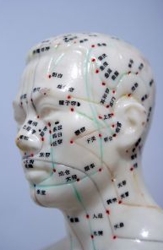
Acupuncture is a complex therapy that was developed by the Chinese over 2,000 years ago. It is a therapy used to prevent disease and to also maintain good health. For the purposes of this article, acupuncture can be described simply as a healing practice which either disperses or stimulates energy flow within the body through the insertion of needles into specific points related to energy meridians. For the skeptics, the World Health Organization has provided proof that acupuncture points really exist. They have also identified over 100 different conditions that respond to acupuncture including migraine headaches, asthma, gastrointestinal disorders, sinusitis, addictions, paralysis from stroke, stress related back pains, hair loss, and various forms of arthritis. Note: Acupuncture and herbal medicine therapies have been recently touted as beneficial for many women's hormonal related issues including menopause, PMS, morning sickness, and menstruation problems. Is Acupuncture Safe?
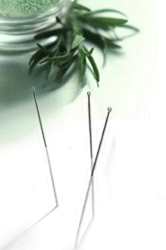
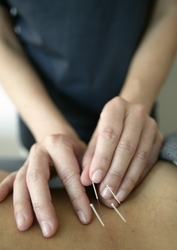
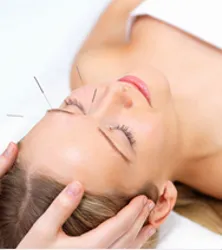
Many people believe that acupuncture is a safe and helpful treatment option. Some health insurance companies agree and have put their money where their mouth is by covering some forms of acupuncture treatments. Acupuncture has become one of the growing alternative treatment options for many people in the U.S. CNN reported "that alternative medical practioners received visits from over an estimated 629 million patients in 1997, which is up from a reported 427 million in 1990". CNN projected in reports that Americana are currently spending in excess of $21 billion dollars for alternative health treatment options which includes acupuncture as a major option. There are always exceptions to every rule, but acupuncture is considered safe by most health experts. Some allopathic physicians have even begin to study and incorporate acupuncture into their practice in order to provide alternative treatment options. It's not uncommon for chiropractors to also be licensed to practice acupuncture along with their chiropractic treatments. The majority of all acupuncture physicians use disposable, pre-sterilized needles to prevent contamination or the spread of blood-borne diseases like hepatitis and AIDS. Acupuncture needles come in different sizes and thicknesses. Most are designed to be long and thin. Needles come in gold, silver and different types of metal. The most common type of needles is stainless steel needles which are inserted into various meridian related points on the body. Painless Needle InsertionsAlthough I can't speak about the insertion methods for all acupuncture physicians, I've never personally experienced any pain from acupuncture treatments. While the initial needle insertion may produce a slight tingle, for the most part, the needles go in without my awareness. Some of my treatments have included the presence of 10-15 needles in my body for as long as one hour. Again, I did not experience any pain during the treatment.
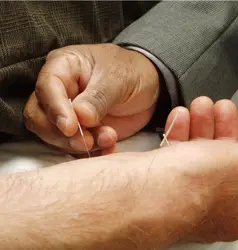
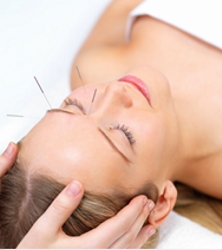
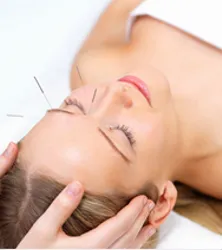
It's a fact that some people are more sensitive to being "needled" than others. If you suspect this to be the case, explain your initial concerns to your acupuncturist. A standard acupuncture treatment usually consists of reclining, fully clothed, on a comfortable treatment table for a period of few minutes to an hour, with the average treatment lasting 30 minutes. Although needles can be inserted into several points, the majority of needles are inserted into the hands, feet, and top of the head. Healing EnergyThe Chinese believed that the human body is born with an infinite energy supply that circulates through the body in defined cycles along meridians. Life for all humans consists of a constant energy exchange. Healthy food, vitamins, and daily exercise add energy while daily stress, poor dietary choices, and illness deplete energy. The same is true regarding hair. Good nutrition and care add energy and strength to your strands while poor food or other choices can slowly undermine any healthy head of hair. The goal of acupuncture is to help provide balanced energy so that the body can heal itself. The human body has incredible power to heal and repair itself from disease or accidents. The body is constantly working on ways to maintain any equilibrium that has been disrupted. It is also believed that the root of all illness and ultimately death can be traced back to an energy imbalance in the body. DiagnosisLike traditional doctors, acupuncture physicians depend on detailed diagnosis in order to analyze disease symptoms. The diagnostic goal is to discover the underlying cause of any illness. In Chinese medicine the physician works to discover the body organ in which a disease is situated and to evaluate the flow of energy along the main meridians. The energy level within the body is of primary importance in planning the most effective course of treatment.
There are basically three ways to diagnose the energy levels. These three methods include basic physical observation, the ancient Chinese method of reading the pulses, and a more traditional method of taking a complete history along with laboratory testing. Some physicians will use all three methods of diagnosis while others may use only one. Physical observation occurs when the physician eyeballs the patient to evaluate the patient's facial and eye color, hair condition, and color as well as skin tone. Dr. Mauro explained that "both the condition and color of the hair is important to observe closely". The acupuncturist also observes the condition of the tongue, the color of other body parts, the condition of the bones, fingers, hands, and nails. Often the patient will be asked about their dietary and elimination habits. Reading PulsesSome physicians depend solely upon physical observation while others will read the pulses as well. When the acupuncture physician reads the patient's pulses they are practicing the ancient Chinese method of evaluating the overall state of energy balance within the body. The Chinese developed an all-encompassing scope for reading the state of energy balance within the body. The ultra-sensitivity of this method enables a physician to diagnose the subtlest fluctuations in the flow of energy between the organs and bowels along with the meridian circuits. The development of a superior ability to read the pulses demands a complete understanding of the basic techniques and lots of practice. Testing & Traditional HistoryIt's hard to predict whether a physician who practices acupuncture will utilize one or more than one method of evaluation. Depending on a variety of factors, some physicians will also take a complete medical history and supplement it with appropriate laboratory testing. Acupuncture & Hair
Dr. Mauro from time to time utilized all three forms of diagnosis. He explained that "while some of his patients had been treated specifically for hair related diseases and problems when his patients were treated for other physical issues, their hair just naturally improved along with their body". Chinese medicine is a holistic medicine. This means there is an awareness that what affects the body, will also affect the mind and what affect the mind will also affect the spirit. Going in the opposite direction, an emotional disorder can manifest in the body as a disease or other disharmony. Dr. Mauro explained "Chinese medicine and acupuncture teaches that the condition of the hair on the human body is ruled by two different physical organs in the body. While the kidneys have primary rulership over hair on the scalp and head, the lungs actually govern all other hair on the human body". An example of this kidney connection is the fact that premature graying of the hair is considered by Chinese medical practitioners to be directly related to a deficiency of "Kidney Jing". Dr. Mauro explained, "Jing is a substance which is stored and produced by the Kidneys which controls hair". So what does this mean? Dr. Mauro told me in the past "when there is damage, weakness, or disease affecting the kidneys, scalp hair will often react by falling out or becoming dry, brittle, or damaged". Dr. Mauro notes "the kidneys and to some extent, the liver can impact hair color or lack of color". Which ties back to the premature graying of the hair due to a kidney deficiency. As previously explained, the overall color and condition of the hair is often a key indicator or illness in the body. Needles, Diet & Herbs
Dr. Mauro believed that "proper nutrition and vitamin supplementation could help overcome a majority of hair problems. He also believed that the existence of weak strands, sluggish growth or serious hair loss issues needed to be evaluated on a case-by-case basis for appropriate treatment. Dr. Mauro often combined a series of "needle treatments with Chinese herbs and special diet" to deal with "chronic or progressive hair related diseases". Was Dr. Mauro able to cure all forms of hair loss including baldness? "Depending on a variety of factors that must be evaluated. many cases can be significantly improved with the use of a custom designed treatment program." Does acupuncture really help hair loss and baldness issues? Many practitioners treat their patients for hair related diseases with some measure of success. Although needles may be utilized, the course of treatment prescribed may include a combination of Chinese herbs and diet along with acupuncture. The Hubei Journal of Traditional Chinese Medicine, #1, (published in 1994, page 49) reported the results of a study of 30 cases of baldness that were treated and studied over time. The study reported the successful reversal of hair loss for 25 out of 30 cases through the combined application of Chinese herbs and acupuncture treatments. SummaryCan acupuncture actually help with a range of hair problems? While I personally believe it can, I am sure this is a controversial topic which should be examined on an individual basis. Although there are many excellent acupuncturists around the world, everyone must find their own best practitioners for optimal results. - Revised Date: 07/06/2020, 11/08/11 |
|||||||||||||||||||||
|
If you want to talk more about this or other hair care articles on HairBoutique.com or anywhere else, please post a message on HairBoutique.com's Hair Talk Forums. |
Please follow us on Twitter at: https://Twitter.com/HairBoutique. I look forward to meeting new people from all walks of Twitter and learning from their Tweets.