
Wanna talk?
HairTalk® is the place for you!
Copyright 1997-2025, hairboutique.com, All Rights Reserved.




Introduction
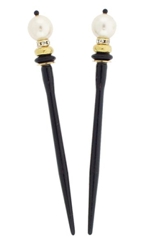
Most of us take hairpins for granted since they have been around forever. Recently someone asked me to create a description for a hairpin and I had to stop and think about how to describe this common hair tool that has been around since the very beginning of any hair accessories. So what is a hairpin? They are not as simple to describe as you might suppose. Historically the term hairpin could be used to reference a one or two point pin ornament. One Point HairpinsModern hair sticks that consist of one long stem or cylinder that ends in a point at one end in an ornament or knob on the other end was known throughout history as a one point hairpin. The unadorned pins might end in a sharp or very soft point, depending on the overall design of the sticks. The single stemmed hairpin was in existence in early Greek, Roman and Egyptian times although some anthropologists believe that even the very earliest cave dwellers used everything from thorns, sticks, bones and stone to fashion crude hair pins. The point hair pins have been documented as being worn in China in the earliest days of the Chinese empire. The single stem hairpins from the 13th, 14th and 15th centuries were elaborately adorned with flowers, animals, artistic figures or even versions of human heads made into miniature busts. The pins were worn both to help anchor hair into place as well as to add decoration.
Besides an assortment of end adornments, the actual pin stems were made of a wide variety of materials ranging from wood, stone, horn, a range of metals and bone. It has been recorded by historians that a wooden hair-pin was found among Roman remains at Uriconium. The London Museum has a collection of Roman hairpins whose stems were made from hand carved bone. Sticks were used both to hold an elaborate hairstyle in place as well as to decorate it. The Etruscans and Romans were known to adorn their single hairpins with fruit motifs. Anglo-Saxons loved to utilize birds and gemstones with a special fondness for garnets. Single hairpins from the Orient were longer than the pins favored by the Greeks. Note: Some of the most beautiful hand crafted hair sticks or single hair pins with decorative toppers are The Mei Fa Hairstyx which were one of the first of its type on the marketplace. There have been lots of copycats but Mei Fa remains the best and most consistent in quality. Japanese versions were very long and were created without pin head adornments. They were also worn in pairs with the stick's ends projecting for an impressive distance from opposites of the scalp. Often the pins were crossed in the middle. A type of hairpin known loosely as a Bodkin was worn during the Renaissance period and was made of gold or silver and richly adorned with diamonds, pearls, emeralds and other gemstones to denote wealth. Double Point Hairpins
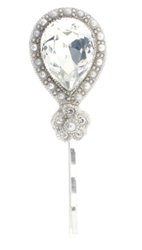
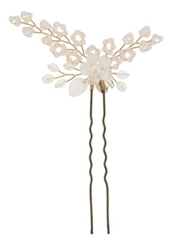
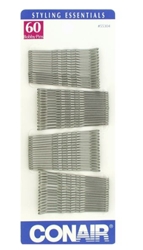
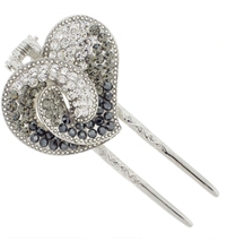
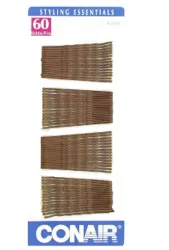
Unlike the single point hairpin known as a hair stick, the double point hairpin was a U-shaped cylinder that was sharply bent at the head so that the two cylinders or pin pieces extended in a parallel and equal length. The two pin's pieces, or shanks may or may not touch. Double point hairpins that have shanks that touch in the middle (as shown below) and at the ends are known in modern times as Bobby pins. Pins that do not touch (as shown to the side) are known as French hairpins, chignons or hair picks. Double point hairpins originated in very ancient times being recorded in the 3rd and 8th centuries in China. Similar two prong hairpins were recorded in Korea during the 12th and 14th centuries. The earliest Chinese and Korean pins were very delicate unlike the modern versions. The ancient pins had thin and fragile shanks. As the double point pins evolved through the ages they became more sturdy with thicker shanks, rounded ends and adornments that were designed to fit at the U shape of the pin. The earliest pins were made of precious metals such as gold and silver. Some double prong pins were made with wood and bone although metal pins were favored for their ease of bending at the intersection of the pin. Along with hairpins was the eventual appearance of the Aigrette which first appeared in the 17th century and was popular until well into the late 18th century. It reappeared in the late 19th and early 20th century. Modern day hair barrettes often resemble the Aigrette.
The Aigrette was a gold or silver hair ornament that was shaped like an egret plume. Aigrettes were almost entirely set with gemstones and were enameled. It was held in place in the hair by means of a slide or vertical hair pin. In modern times the two prong pin is very popular and comes in a range of shapes, sizes, colors with a dizzying array of head adornments. Hairpins remain extremely popular because they not only fasten hair, they instantly decorate it. Korea and China are still the top producers of two prong hairpins worn around the world. Although some users struggle with the proper use of one pronged hairpins or hairsticks, most people have no problems using the two prong chignon pins, French or bobby hairpins. Wig HairpinsPins that are used to penetrate hairpieces or wigs are often referred to as T-pin or wig hair pins. Hairpins that are designed to penetrate through a wig or thick hairpiece into the head block are designed differently than pins used with human hair. Wig pins are small and usually have a sharp point at one end to help the pins penetrate the wig piece. They are also usually made of metal that is chrome plated so that they never rust and can remain in the wig while it is being shampooed or styled. Hairpins In The 40s, 50s & 60sBack in the era of WW2 hairpins sold for approximately ten cents for a card that held an average of 24 pins if they could be found. During the war hairpins were scarce, along with everything else. The number one problem with pins in the 40s, when they could be acquired, was that they might rust over time. During the fifties hairstyles were created around ponytails that often utilized bobby pins to help hold back errant stands and bangs that were growing out.
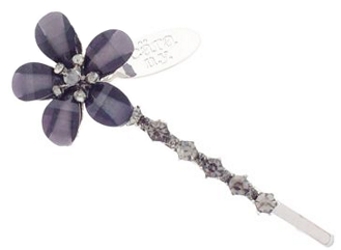
Soft curls were also the rage and were created by a nightly ritual of making a head full of pin curls held in place with open hair pins. It was a known fact that using tight bobby pins to hold pin curls in place could cause creases in the hair. Unfortunately there were no blow dryers back in the 50s and more elaborate styles required sleeping on a head full of curlers help in place by the traditional metal hairpin. As hair rollers evolved from the small foam rubbers numbers through the brush numbers to large plastic rollers, hair pins and bobby pins were a major hair tool used to hold the rollers in place. During the 60s, to achieve large bouffant looks, many women endured the torture of sleeping on recycled orange juice cans held in place with giant oversized bobby pins. Hairpins And Bobby Pins In 2009Hairpins are more popular then ever. You only need to tune into Sex And The City to see Sarah Jessica Parker as Carrie wearing an assortment of bobby and hairpins as part of her latest hairstyles. In fact, in some episodes, Carrie was spotted in several scenes wearing very obvious bobby pins to anchor her ponytail and in another scene to anchor her half up/half down casual style. (Shown to the side - Petite Bobbies - decorated double bobby style pins from France Luxe). Although the one prong hairstick has waned a little in popularity over the past year, two prong chignon pins are sizzling hot. Decorated two prong French and Bobby pins are also sought after. Not only are they easy to use, they add instant sizzle to just about any hairstyle.
Pearl and jewel encrusted French pins are often utilized to adorn a hot hair twist, knot of updo giving the illusions that tiny pearls and gems are "floating" aimlessly on top of the strands. Austrian crystal and pearl bobby pins are often favored by brides as a way to add a touch of glamour while holding their bridal hairpieces in place. Hairstylists still favor metal bobby pins to anchor elaborate French twists and updos although often they are used in hues that match the hair color to camouflage their existence as part of the do. Hairpins have been around since the beginning of time and they will continue to be around for many years to come. Social Media Network InformationPlease follow me on Twitter at: http://Twitter.com/HairBoutique. I look forward to meeting new people from all walks of Twitter and learning from their Tweets. Visit us at Hairboutique.com located at: http://www.HairBoutique.com, on Facebook, MySpace and YouTube.
Thank you for visiting us at The HairBoutique Blog and for leaving your comments. They are very much appreciated. We apologize in advance but must remove any direct advertisements or solicitations. from all walks of Twitter and learning from their Tweets. Visit us at Hairboutique.com located at: http://www.HairBoutique.com, on Facebook, MySpace and YouTube.
Thank you for visiting us at The HairBoutique Blog and for leaving your comments. They are very much appreciated. We apologize in advance but must remove any direct advertisements or solicitations.
- Revised: 12/12/09 |
||||||||||||||||||
|
f you want to talk more about this or other hair care articles on HairBoutique.com or anywhere else, please post a message on HairBoutique.com's Hair Talk Forums. |
Please follow us on Twitter at: https://Twitter.com/HairBoutique. I look forward to meeting new people from all walks of Twitter and learning from their Tweets.