














Wanna talk?
HairTalk® is the place for you!



Copyright 1997-2025, hairboutique.com, All Rights Reserved.




Introduction
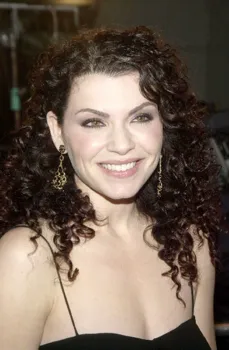
One of the biggest hair trends flexing its muscle at the 2002 Academy Awards was curls. Big curls, spiral curls and all sorts of curly updos were in abundance. While some of the curly coiffed celebrities like Sandra Bullock and Nicole Kidman are blessed with natural ringlets, not everyone is quite so lucky. When curls return to the hair fashion For people with stick straight strands, perms that offer "wake & shake" instant curls, waves or big texture are a very definite temptation. Although curls can be temporarily created with a wide assortment of hook and latch curlers, curling irons or hot rollers, perms may cut styling time to the quick. Like everything else in life, options that offer convenience have pros and cons. Such is the case with chemical perms. Are curls really here to stay? Master Atlanta stylist Bob Steele of The Bob Steele salon believes "that curls are long overdue". After all, he pointed out, "all major hair trends come back around and curls are due their turn". Straight is boring and it is time for curls to burst forth.
Just like everything else in life, achieving instant curl confidence is not always as easy as it seems. For some people the perming experience is a walk in the hair park. For others, transforming their straight locks into curls throws them into a series of bad hair days that make them pine for their lost short, straight strands. How do you adopt the new curl intelligence without getting burned? Research, research, research.
New Name & New ImageIf you haven't had a perm since you were getting ready for your First Grade dance recital, you might be in for a big shock if you decide to shop for a perm. Most stylists have ditched the term "perm" for chemical texture service or other marketing terms designed to dispel consumer perm phobias. Hairdressers also want consumers to believe that they have dumped the harsh chemicals and noxious odors of perms from the 50s and 60s. But have they? Maybe, maybe not.
To try and lure consumers back to the chemical perm salon cash cow, perm companies have created "new chemical formulations" that are mixed with a range of new ingredients including herbs, natural ingredients and essential oils. Some hairdressers add so-called conditioning oils to the perm mixes with the claim that it will protect hair from the chemicals. Salon owners and hairdressers are also touting maximum flexibility of wave and curl creation by offering new rolling patterns, techniques and perm rods. Hair manufacturers discovered in the mid-90s that newly empowered hair consumers demanded a more efficient, streamlined, healthier perm process. They were also unwilling to suffer through months of damaged and burnt strands from harsh perm chemicals or faulty application techniques. Hair consumers were more pressed for time. The days of spending all day in the salon while your perm "cooked" has been replaced by high tech formulas for optimal hair texture creation and faster chemical processing. "Express perms" are only part of the hair texturing options that are possible in some select salons. Of course to successfully create new texture in the form of curls and waves, perms still require the use of harsh chemicals. Express perms simply leave the damaging chemicals on the hair for a shorter time period. New ToolsEven the perming rods have changed. Depending on the size of rollers or tools that are used, a hairdresser can entice a hair customer to have a perm by offering a lot or a little texture. The rods have changed dramatically to range in all sizes. Again, a major marketing ploy to drive more salon dollars into the perm coffers.
It used to be that the hairdresser had limited options on which rods to use to create perms. This is no longer true. While one hairdresser may use one style and size of rods to create your perm, a hairdresser at the very next station may feel more comfortable with different sized rods. Keep in mind that some perm experts have dumped the traditional rubber rods for scraps of thick carpet, empty juice cans, old fashioned sponge rollers, aluminum foil, pin curls, rag rollers and pipe cleaners. You name it and you can probably find a chemical texture artist who utilizes some wild curling tool. A creative hair artist will use just about anything that works for them to achieve a custom designed texture and curl that looks natural and beautiful. After all, the goal is to encourage consumers to have perms, whatever it takes. Don't assume that because your stylist utilizes a certain type of rod that they are not well versed in the proper rolling techniques. While no two surgeons use the same exact type of scalpel, no two stylists use the same tools. If you have your heart set on a certain type of rod from your past and your stylist is unwilling to use that type of rod you may want to terminate the perming process. Some clients believe that a certain rod is best for them and their hair. If this is your case and the stylist wants to use another type of rod then find a stylist that will support your needs. Is A Perm Really Right For Your Hair?
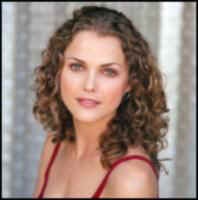
While a perm is marketed to offer maximum flexibility from a quick toss and tug to elegant ringlets, perms are not for everyone. Dallas based stylist Shelley Pryor warns that "not all types of hair are well suited for the perming process. Even though many experts believe that thin or damaged hair can safely survive a perm Shelley argues strongly with this premise". Pointing out that she has helped "repair lots of fried hair from perms that should never have been performed" Shelley will not agree to perm anyone's hair "without checking it very carefully". Even in the very best of circumstances Shelley warns that "not all people will react well to perms". She believes this is true "no matter how carefully you work with their hair, the type of rods that you use or how much you do your best." Shelley noted that many people see a great looking perm on someone else and assume that they can achieve the identical results. Unfortunately this is a common fallacy in the hair world. Especially if you are comparing natural curls with chemically induced curls. Many people make the mistake that a perm can duplicate natural curls. In the majority of cases Shelley explained that natural looking curls are easier created from non-chemical techniques. Since Shelley has almost perfect naturally curly ringlets she is often told that her clients want "a spiral perm with curls just like yours". As Shelley noted, her "ringlets are the gift of Mother Nature and can not be duplicated through a perm in the majority of cases". Are Perfect Curls A Myth?Although many celebrities and actresses like Keri Russell have perfectly formed ringlets, there is a well-known secret behind the perceived hair perfection. As Shelley explained "even naturally curly hair doesn't always form the most uniform ringlets". When natural curls go askew most stylists like Shelley will use a series of curling irons to create that tight ringlet that looks effortless, but isn't. If you are lusting after a perm because you believe you will have perfect curls, you may not be a good candidate for a perm. Why Do Perms Fails?Barbara Lhotan, a senior educator with Paul Mitchell Systems pointed out that "every great hairdresser has clients that just don't take perms well". As Barbara explained "it's just a risk that the client has to be prepared to accept or else they should not even consider a perm".
Perms fail for a number of reasons. People on certain types of medications or with thyroid or other health problems may be candidates for a botched perm. Many stylists report that women on birth control pills or hormone replacement medications have hair that will not take a perm well. Pregnant women or women who have just given birth are other "problem perm" candidates. If your hair has previously been colored, highlighted, permed, straightened or otherwise altered, you may NOT be a good candidate for chemically induced curls. When it comes to chemical perms there is no guarantee the treatment will be what you dreamed it would be. Keep that in mind as you weigh all perming pros and cons. Never rush into a perm no matter how spontaneous you are as a person. If you get a perm and don't like the results you will have to live with that perm for several weeks unless you surrender to the scissors for a major chop. Does Your Hair Have Permability?Is your hair really a good candidate for a perm? It is always best to work with a stylist in order to get their evaluation of your hair's porosity and viability for any chemical process, including a perm. If you are unsure whether your hair will do well with a perm solution, you can do an at-home evaluation. Check your own hair for permability by snipping a strand or two of your hair from a place on your scalp that is not obvious. Place the strands in a glass of fresh water. If your hair floats there is a good chance that your hair can survive a chemical treatment. Floating hair means that the cuticle and cortex layers are healthy. If your hair sinks, the cuticle and cortex may be damaged and could not withstand a chemical treatment. If the hair is too porous a perm won't take and color won't stay on the cuticle. Getting The Same Look Without The Perm
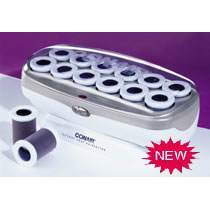
Over the past few years many hairdressers have learned that they can mimic the similar texture and movement of a curly or wavy perm by utilizing a great cut combined with fabulous gels, mousses, glazes and molding muds. Hair extensions and clip-on hair that is already chemically curled or waved is another hot option without the damaging heat. The good news is that taking the perm-less route to create waves and curls results in much less damage to the hair. Many hairdressers who worry about perm damage will offer their clients a curly or wavy look created in the salon with hot rollers or irons. This offers clients something a little unique that lasts for a day or two until the curl stretches out or the texture is washed out. With a little training, clients can learn to recreate the curly looks at home using curling irons, hot rollers and modern rag rollers.. Granted the high tech styling products can only go do far. Yes, they will product curls, texture, flexibility and great shine but the set only lasts until the next shampoo. Can a cut make up for some of the desired chemically induced texture? To some extent it is possible but again, a great cut can only take you so far. The most brilliantly executed hair cuts still can not cause curl or waves to form. Long Hair Perm ConsiderationsIf you have long hair you may want to think long and hard before subjecting your hair to any type of chemically applied texture. Keep in mind that if you spent a long time growing gorgeous long hair, a less than perfect perm might damage your tresses. To add desired hair movement, first consider "long hair friendly" techniques such as rag rollers, pin curls or old fashioned "under the hood dryer" sets. If those options don't work, apply a good leave-in conditioner and carefully spot curl your ends to get more hair body and movement.
Unfortunately it's true that some unsuccessful perms can only be removed through time or a scissors. Cherish your long locks. If you must apply chemicals, do it carefully and with lots of forethought. Hot Trends In MovementA popular trend for hair consumers is to demand more natural movement and flow from their stylists. A hair client with stick straight hair is definitely a challenge to some hairdressers. This is because their cuticles have virtually no natural bend or twist. For those type of clients, the curls may have to be created from chemical scratch. True hard core movement may really only be achieved with chemical texturizing in some cases. Whereas a curling iron creates perfect curls, the more spiral results of these techniques mimic the capricious corkscrews and crinkles of natural hair. All kinds of hot, Velcro and other types of rollers have become pretty popular again as a result of the current curls and waves fad. Halle Berry influenced the return of the finger-wave look in 2001 and it'ss still going strong in some regions. Good Perm Insurance
If you have your heart set on a perm and have made peace with the fact that there are risks, then follow your curl fantasies. It is important to look for a hairdresser that has significant practice with chemical processing. If they offer a wide range of perm options with a range of tools, you know they can help you achieve a great look. Whether you have tresses that are healthy, or damaged - long or short - don't rush into the perm process. Take at least a few weeks to give it some serious thought before you take the plunge. Understand that your hairdresser will have their own methods and techniques that work best for them. Always be wary of a hairdresser that seems to pressure you into having a chemical perm or texturizing service. Ask yourself why there is pressure. Any hair care treatment that you undertake should be at your own discretion. If your perm doesn't turn out as you had hoped then your first responsibility is to go back to the stylist and ask them to work with you, no charge, to modify the outcome. Reputable stylists will always stand behind their work and will either deep condition the hair to soften the curls or do spot processing to tighten the curls. There are many ways that perms can be adjusted. Remember that you will never have a chance to turn a heartbreaking experience into a happy outcome if you are unwilling to talk to the stylist and ask them to work with you. So many people are afraid to contact the stylist and tell them they are unhappy. Understand that good stylists want happy customers and are only too delighted to make adjustments. ConclusionChemical perms may or may not be the best solution for your luscious curls. If you decide to go for it, make sure you find a stylist that has expertise in this chemical arena. Keep in mind that if your hair is damaged, unhealthy or you have some other extenuating circumstances, a perm may not be your best option. Instead, dust off your favorite curling iron, hot rollers or rag rollers and go to work winding away. | |||||||||||||||||||||||||||
| If you want to talk more about this or other hair care articles on HairBoutique.com or anywhere else, please post a message on HairBoutique.com's Hair Talk Forums.
|
Please follow us on Twitter at: https://Twitter.com/HairBoutique. I look forward to meeting new people from all walks of Twitter and learning from their Tweets.